How Californians Navigate a Complex Long-Term Care System
by Jeff vonKaenel
Fifteen years ago, 56-year-old veteran Eldon Abston was in crisis. His wife was dying. He had just suffered a major stroke and could no longer care for himself. A nursing home felt like the only option—and he had no idea how to find an alternative.
A friend, Kay Letlow, stepped in. She would later become his in-home caregiver, but at the time she did something more basic: she helped him make a call.
That call connected Abston to the Fresno-Madera Area Agency on Aging, which runs the local Multipurpose Senior Services Program (MSSP). The program is designed for people who qualify for nursing home care but want to remain at home. Instead of providing hands-on care, MSSP assigns a care manager who helps coordinate services and navigate a complex system.
From there, a network took shape. Through providers connected to the Fresno-Madera Area Agency on Aging (FMAAA), Abston lined up in-home support, meals, and other essential services. Together, those supports made it possible for him to stay at home—at a lower cost than institutional care.
None of this happened by accident. It worked because there was a system behind it—one designed to catch people, connect them, and keep them from falling through the cracks.
“We try to connect people with the right person the first time so they’re not getting bounced around in a system that can be complicated and siloed.”
Jamie Sharma, Executive Director, Fresno-Madera Area Agency on Aging
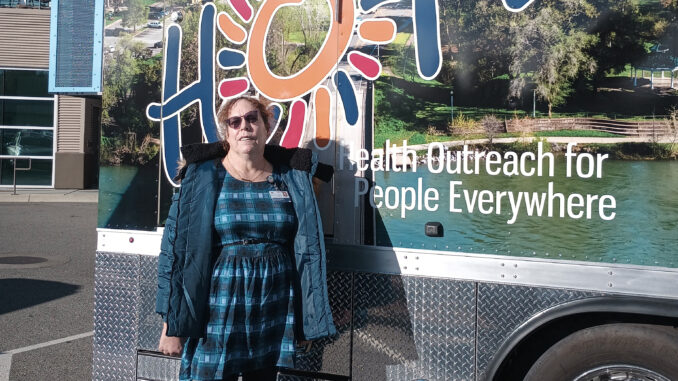
In Fresno County, that system is anchored by FMAAA, which serves as a central hub for older adults and caregivers trying to navigate a fragmented network of services.
Folks find the agency via numerous entry points, says Jamie Sharma, AAA’s executive director.
“It might be through a nutrition program, or they call our information and assistance line,” Sharma says. “Once we identify a need—even one they didn’t know we could help with—we connect them to the right service.”
That first point of contact matters. Many older adults and families don’t know what programs exist, or where to begin. In Fresno, a single call can set off a chain of support—linking people to meals, in-home care, transportation, or more intensive services like care management.
“We try to connect people with the right person the first time,” Sharma says. “So they’re not getting bounced around in a system that can be complicated and siloed.”
FMAAA serves a large and diverse region spanning more than 8,000 square miles, and encompassing bigger cities such Fresno as well as rural and mountain communities, particularly in Madera County. Such a diverse range of geography means that access to services can vary significantly depending on location, further reinforcing the need for coordinated and accessible support systems. Across this region, more than 38,000 older adults are considered low-income.
In Fresno and Madera counties, that work happens at significant scale.
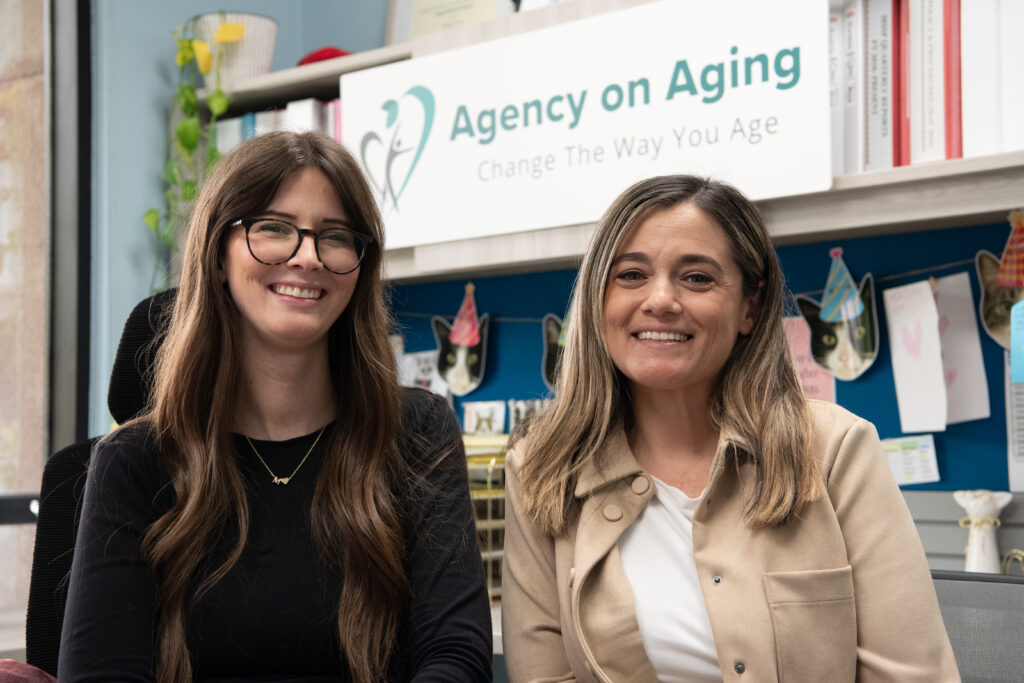
Photo By Peter Maiden
The agency fields approximately 600 calls each month through its information and assistance line – often from people who don’t know where else to turn.
Across its programs, it serves roughly 14,000 residents each year. Nutrition programs alone provide more than half a million meals annually, helping people remain in their homes and communities.
These numbers reflect both the demand for services and the role the agency plays as a central hub—connecting people to the support they need to remain in their homes and communities.
Behind that connection are staff working across programs to make it happen. In Abston’s case, two program managers worked side by side across different programs to coordinate his care and connect the pieces.
Sarah Santoyo, a program manager at FMAAA says they work with seniors to clarify and overcome bureaucratic hurdles.
“People come to us in all kinds of situations, and it’s not always clear where to start. We take time to understand what’s going on, then work together across our nutrition and case management teams to connect them with the right mix of support,” Santoyo says. “Behind the scenes, our staff are constantly checking in, coordinating, and working together to keep things moving forward for people like Eldon.”
Sarah Carl, another FMAA program manager says their agency emphasizes adroit teamwork.
“Through strong communication and real-time coordination, our staff collaborate across programs, making appropriate referrals to one another to ensure every participant receives timely, comprehensive support through a true whole-person approach,” Carl says.
Such behind-the-scenes coordination is often invisible to the people receiving care—but it is essential to making the system work.
For people like Abston, that coordination can mean the difference between staying at home and entering a nursing facility but not everyone enters the system that way.
If you had told Samantha Breton in 2010 where her life would be today, she says she wouldn’t have believed you.
“I would have told you that you were delusional,” she says.
At the time, Breton was homeless, battling severe depression, chronic pain, and repeated suicidal thoughts. She didn’t know how to find help—or even what help existed.
“I was surviving,” she says. “But that was it.”
The turning point came at a homeless shelter in Redding, where staff connected her to mental health services and counseling. From there, a network of support began to form—Shasta County Mental Health, Shasta Community Health Center, and eventually stable housing with on-site services.
Along the way, Breton connected with a local Independent Living Center (ILC), part of a statewide network that helps people with disabilities navigate complex systems, set goals, and live independently.
At the Disability Action Center (DAC), staff see people like Breton every day—often after they’ve been turned away elsewhere.
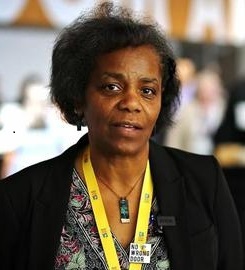
“When they come in our door, they’ve usually been to multiple other agencies and been given one word: ‘no’,” says Carolyn Nava, DAC’s community relations director
By the time they arrive, many are in crisis, she adds.
“They’re desperate, frustrated, sicker—and feeling like they’re at the end of hope,” she says.
Unlike more traditional service models, ILCs are built around peer support and self-direction. Instead of prescribing solutions, staff work with individuals to identify their goals and build a path forward.
“We allow people the dignity of setting their own goals,” Nava says.
This approach often reveals needs that go beyond the initial request. What starts as a search for a wheelchair may uncover food insecurity, housing instability, or untreated health conditions.
“It’s very rarely one issue,” Nava says. “It’s typically a compounded situation.”
And without help navigating those layers, many people never access the support for which they qualify.
“If you can’t navigate the system, the system is useless to you,” she says.
Today, Breton has been housed for nearly nine years. She volunteers, serves on advisory boards, and runs a support group at DAC for LGBTQ+ people with disabilities. With the help of an in-home caregiver, she lives independently and gives back to others navigating the same system.
“Instead of just getting help, I’m part of the solution now,” Breton says.
Abston and Breton’s stories exemplify two distinct pathways into California’s long-term services system. One is anchored in coordinated services—connecting people quickly to care, food, and support. The other is rooted in independence and peer support—helping people build stable lives on their own terms.
Efforts are underway to better connect these pathways. Across California, partnerships between Area Agencies on Aging and ILCs are being formalized through Aging and Disability Resource Connections (ADRCs)—a “No Wrong Door” approach designed to ensure that, no matter where someone enters the system, they can be connected to the full range of services they need.
When those pathways work, they allow people not just to survive—but to remain in their communities, with dignity and choice.
For more information on various long-term services services and support systems visit The California Collaborative for Long Term Services and Supports at https://www.ccltss.org/