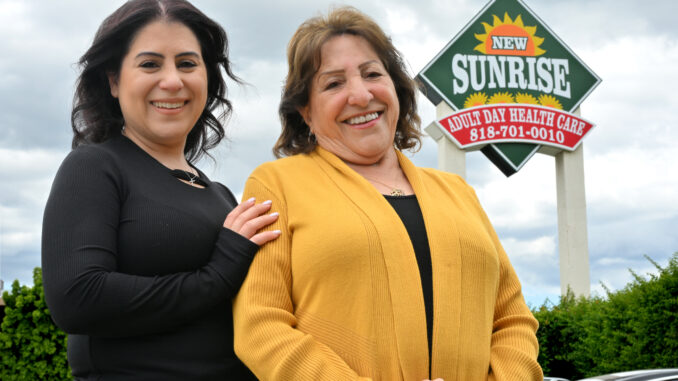
Adult day health care, which provides a critical support for seniors, is at risk for cuts
by Peter Hecht
From her time as a young widow in her native Afghanistan, Arifa Fida has taken charge in difficult situations. Her husband died of a heart attack just before the invasion by the Soviet Union. Soon, she recalls, neighbors were rounded up and jailed for no reason.
“Some just disappeared,” Fida says.
Fida gathered her children, ages 5 and 6, to flee the country. They made it to Southern California, where she attended cosmetology school and raised the kids while working as a hairdresser. Later she built a career assembling and testing computer motherboards and modems. Then she set that aside to help raise five grandchildren.
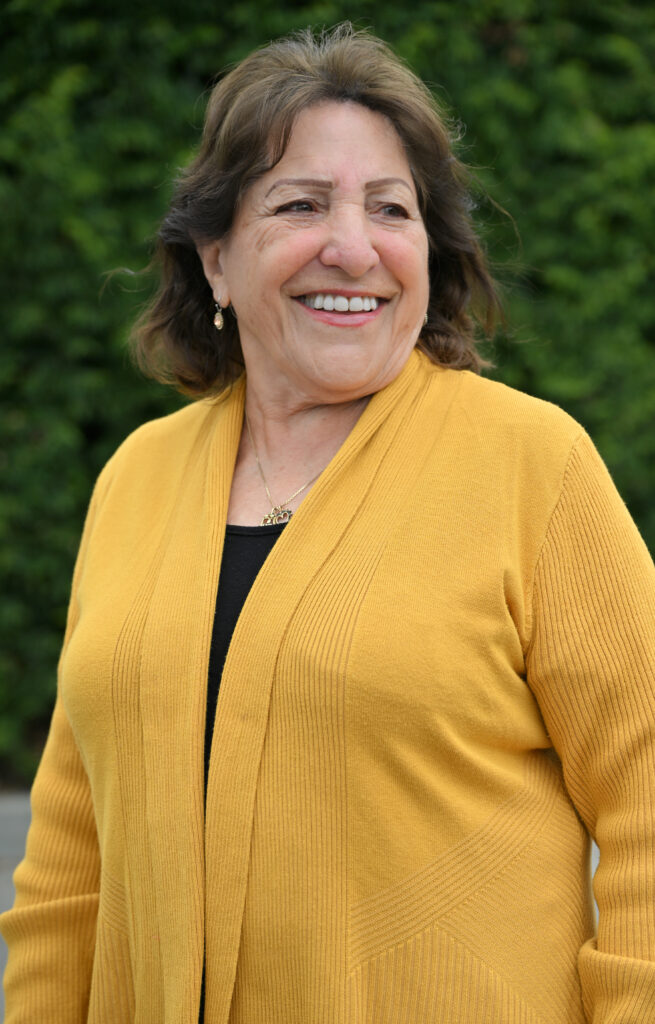
Now Fida is the one getting help. She is 78 and suffers from vertigo. She has pain in her knees and back and takes medication for depression.
“Our programs have always been cited as ‘preventative care.’ Decreasing that care because some people’s condition hasn’t declined is like punishing them for not getting worse.”
Lena Haroutunian, Board Member, California Association for Adult Day Care Services
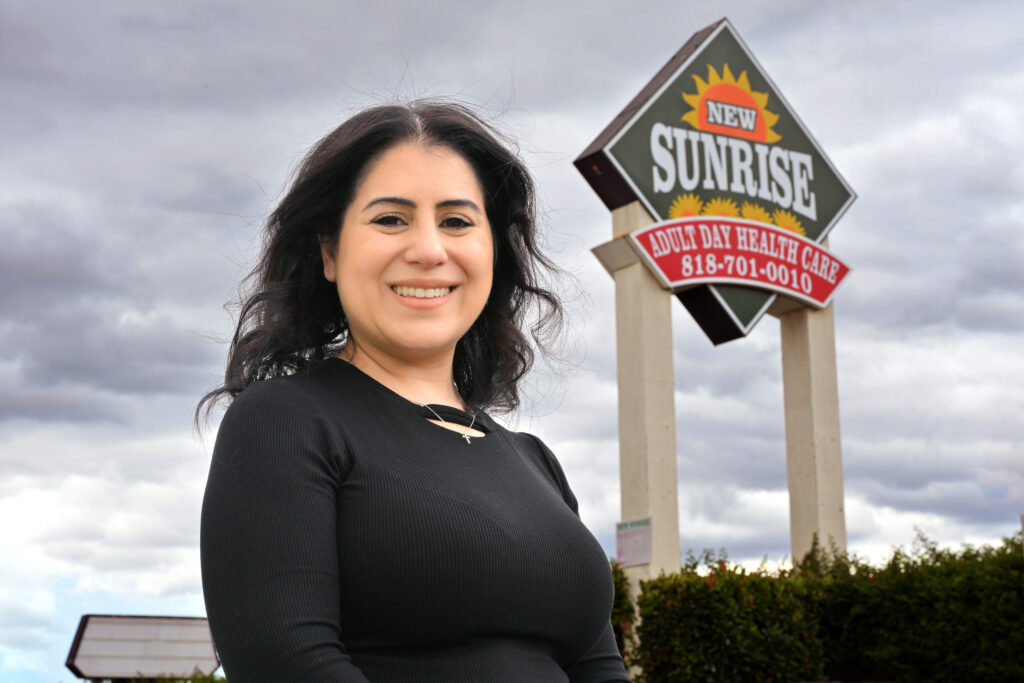
Three days a week, Fida can be found at New Sunrise Adult Day Health Care in West Hills. She has breakfast, lunch and a snack there, participates in games and activities, and does stretching and other therapeutic exercise at a facility staffed by nurses, physical therapists, and even a registered dietitian.
“I love all of them,” she says.
According to the California Department of Aging, more than 45,000 state residents attend adult day care programs at 318 operating centers. The facilities, working in coordination with primary-care physicians, support seniors by keeping them mentally and physically active and reducing social isolation. The community-based services are available for eligible Medi-Cal beneficiaries, who comprise a vast majority of participants.
These services, however, have faced growing financial instability in recent years and are now facing additional threats from federal funding cuts.
Lena Haroutunian, a board member for the California Association for Adult Day Care Services (CAADS), says the programs offer an alternative to nursing homes for seniors.
“It keeps them in their own homes,” she says. “It keeps them from having to be moved into a long-term care facility, or a skilled-nursing facility.”
Haroutunian is program director at New Sunrise Adult Day Health Care in Glendale, which on a typical day serves 170 participants. The facility serves a multi-ethnic community of immigrants from Iran and India, Latinos and Asian Americans, offering catered meals from Persian stew to fajitas to curry dishes.
Programs include memory care and stress-reduction exercises. Group therapy focuses on reminiscing over past times, with sessions highlighting “old photos or posters from sitcoms, or old CDs or records,” Haroutunian says. Sessions targeting depression or anxiety may feature joke-telling or breathing exercises.
Most centers offer transportation, and seniors typically spend four to eight hours a day at the facilities, two to five days a week. The services are credited with preventing hospitalization or delaying institutionalization.
Haroutunian says the centers can reduce the danger of medical emergencies and help save lives. At her facility, nurses once stabilized a woman suffering from insulin shock, and a social worker counseled the family on an injection and feeding regimen to avoid a recurrence. Another time, staff raced to aid a man suffering a heart attack, summoning paramedics in time.
In 2024, the Legislature invested in a small reimbursement increase to stabilize adult day health care centers, which have faced stagnant revenues and fast-growing costs for decades. However, a voter-approved initiative designed to revamp Medi-Cal finances eliminated the proposed rate increase, leaving centers continuing to struggle to stay open.
On top of long-standing pressures, access to the program is now being threatened by new federal Medicaid funding cuts, Haroutunian noted. She says some Medi-Cal or Medicaid-managed care programs are already seeking to reduce the number of allowable days for some participants.
“It is very concerning,” she says. “Our programs have always been cited as ‘preventative care.’ Decreasing that care because some people’s condition hasn’t declined is like punishing them for not getting worse.”
One of those not getting worse is Fida, who delights in her adult-day-care regimen, the facility staff and fellow participants.
“They’re all my friends, coming over and hugging me,” she says. “The staff and the other old people like me. I really feel safe. I feel good over there.”
For more information on adult day care services visit The California Collaborative for Long Term Services and Supports at https://www.ccltss.org/