A long-term care program takes a holistic approach to senior health
by Dorothy Korber
Helen Donley set off from her Marin County home in September 2024 for a nice visit with her daughter’s family in upstate New York. The 83-year-old grandmother was looking forward to staying through Christmas.
Donley hadn’t planned on the heart attack that struck shortly after she arrived. Or the open-heart surgery. Or the seven months of physical and occupational therapy.
It was St. Patrick’s Day before she was allowed to fly back to California, her whole life upended.
Donley, who had been living with an elderly sister, now moved in with her son and daughter-in-law in Concord. She had to begin a new life there by finding new friends, new activities, and most importantly, new medical caregivers.
She also found Concord PACE—the local Program of All-Inclusive Care for the Elderly. As its name implies, PACE covers Donley’s needs while freeing up her son and his wife to go to work knowing that Helen is in good hands.
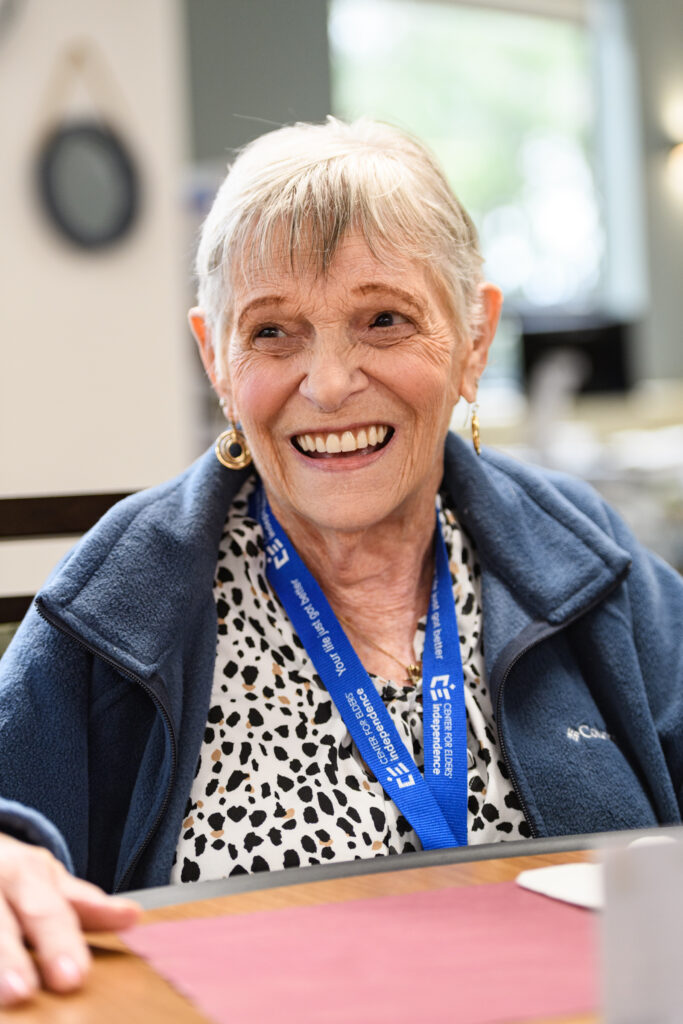
“Going to the PACE center has changed my life,” she says. “I’m not sitting at home. I’m busy and engaged. The exercise and medications I get from PACE keep me mobile and allow me to be able to take care of myself.”
And, she adds, the program allows her to continue living at home with her family.
“I couldn’t ask for a more terrific program,” Donley says.
“Many participants’ needs change over the course of their care with us. We actively adapt the care plan as their needs evolve.”
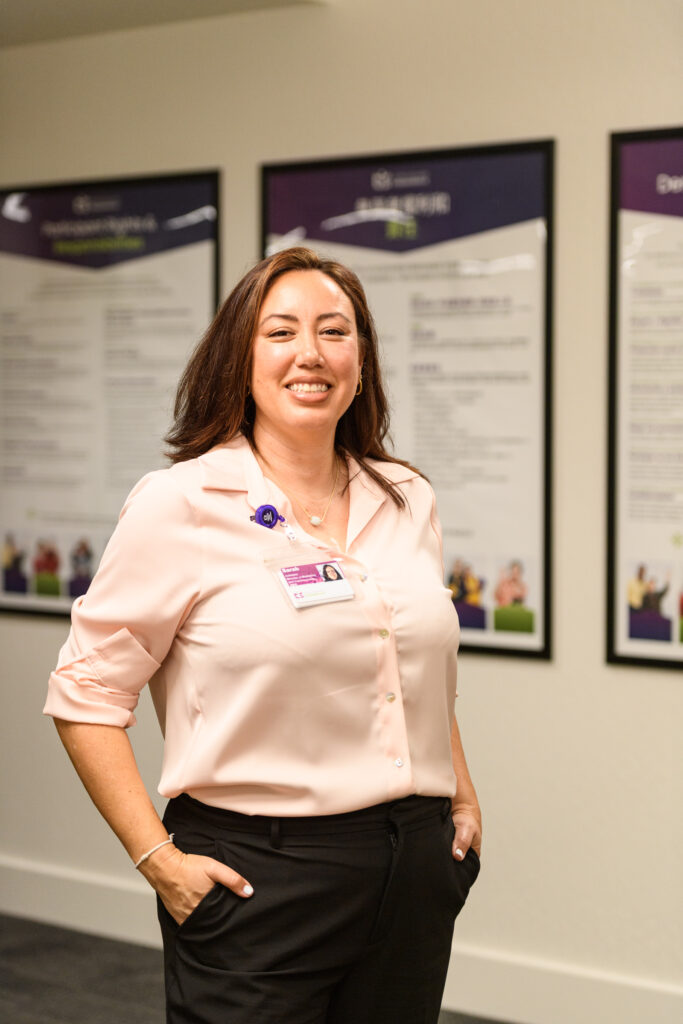
Sarah Juckniess, Communications Director, Concord PACE
For many older adults, however, accessing that kind of support is far from simple. Care is often delivered in pieces, spread across disconnected doctors, specialists, programs, and services. PACE was created to bring those pieces together around the individual.
Operated by the Center for Elders’ Independence, Concord PACE is one of six local centers in the East Bay helping seniors who live at home to navigate their care needs. PACE serves as the health care plan and provider for its 1,600 participants, assigning them primary care physicians and nurses, as well as a whole support team of drivers, therapists, cooks and home health aides.
The goal of the model is not simply to add services, but to organize care more efficiently – reducing duplication, helping prevent avoidable health crises, and enabling older adults to remain safely at home longer.
James Mittelberger, a gerontologist at PACE, says the program is unique in its comprehensive array of services. For families used to coordinating appointments, medications, transportation and in-home support on their own, that level of integration can be transformative.
The task of organizing such services is overwhelming for the average person, he says. PACES helps to simplify the process. For families, that can mean fewer gaps in care and fewer burdensome logistics during an already stressful time.
That team-based approach also offers a model for the broader continuum of care –
one where medical treatment, rehabilitation, behavioral health and social support are coordinated instead of siloed.
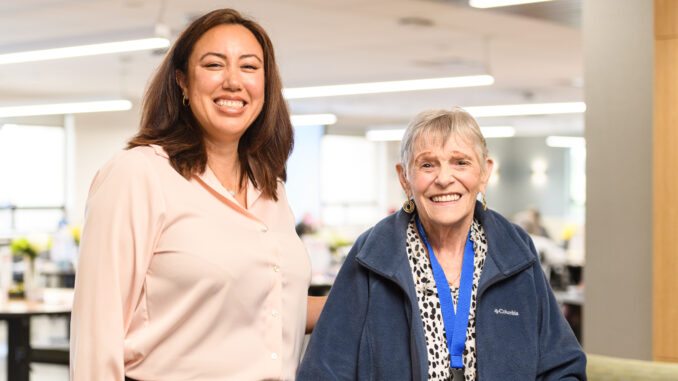
Its coordinated team approach is what separates PACE from most other programs on the continuum of care for the elderly, according to Maria Zamora, president of the Center for Elders’ Independence.
“Our teams build long-term relationships with participants and their family,” she says. “This type of continuity fosters trust and trust is an important enabler to care. Patients are more willing to accept advice or help from someone they know well and trust.
“The beautiful thing about these teams is that the patient’s best and closest relationship might be with their nurse or social worker or their driver. It’s a pretty incredible model.”
Donley agrees with this assessment.
“I don’t know exactly how they coordinate everything, but you see it working every day,” she says.
James Mittelberger, a gerontologist at PACE, says the program offers comprehensive array of 14 services, including transportation, exercise classes and meals.
Because the task of organizing such services can be overwhelming for the average person, he says, PACE helps to simplify the process.
“At PACE, it’s one dedicated team that all works together. That’s a huge advantage,” Mittelberger says.
“We can combine social and medical care, allowing us to deliver treatment, therapy, physical activities, and friendships.”
And, that opportunity to still live at home provides stability and emotional support.
“Some people live happy lives in nursing homes,” Mittelberger says. “But for most of my patients, being at home is the most important thing for them toward the end of life. That’s at the heart of what it means to be human.”
The PACE model embodies important lessons, Zamora says.
“It’s living demonstration for what truly connected person-centered health care and systems can offer,” she says. “It’s the recognition that social, functional and behavioral needs are all core needs – it’s not just diagnosis and medications.”
Team-based care is most effective when it’s truly interdisciplinary, she adds. At PACE, medical and non-medical team members share authority.
“The best intervention might be from the social worker or the dietitian, rather than the physician,” Zamora says. “Another lesson is that our frequent team huddles focusing on the participant have great potential to reduce a crisis further along.
Zamora adds that the team’s accountability is clear and focused.
“We integrate all of those aspects of care under a single organizational and financial umbrella,” she says.
Donley says her participation in PACE gives her the physical strength—and the confidence—to continue to live at home with her family.
Her medical challenges go beyond cardiac trouble. She is a diabetic who is susceptible to infections; she is also a survivor of colon cancer and breast cancer. And, earlier this year, she suffered a stroke that required a month in rehab. Her PACE team rose to that challenge and recalibrated her care plan to cover the new reality and get her discharged back home.
Her story underscores another lesson of person-centered care: older adults’ needs can change quickly, and effective systems must be able to adapt just as quickly.
“PACE never missed a beat,” she says. “Their medical care after the stroke was fantastic.”
This kind of flexibility is a hallmark of the PACE centers, according to Sarah Juckniess, communications director for the program.
“Many participants’ needs change over the course of their care with us,” she says. “We actively adapt the care plan as their needs evolve.”
The idea is to support quality of life and a sense of independence with an emphasis on personalized attention.
“You’re involved in your own care plan. It’s tailored to your independent preferences—and it is different for every individual,” Juckniess says.
Juckniess says most PACE participants receive coverage through Medicare and Medi-Cal, allowing eligible older adults to access comprehensive care with little or no additional out-of-pocket cost.
“The main requirements are that you live in our service area, are 55 or older, face multiple health challenges and can live safely in the community with our support,” she says.
That means everything—including a patient’s final days.
“End of life care is improved when you can have an open dialogue about it ahead of time,” Zamora says.
“It gives the team a real sense of what matters most to the person. Then we can have plans in place before they need them.”
Mittelberger says that simplifying the hospice process provides stability and peace of mind.
“Sometimes, people who are dying go into a separate hospice program.,” Mittelberger says. “At PACE, we don’t tell you to go to a separate program. That would be disruptive. If you need extra support, we add people, and we take care of you all the way to the end of life. We will not leave you.”
That continuity is rare in a fragmented system, where transitions between hospitals, rehab centers, specialists and long-term care settings can create confusion and stress for families. PACE demonstrates what becomes possible when one trusted team stays with the person throughout the journey.
Donley takes comfort from this promise.
“I can’t think of anything better than this situation for me,” she says. “I can’t find the words to tell you how grateful I am for PACE. It’s my second home.”
But access to that kind of care depends on systems behind the scenes working as intended. Each month, between 1,500 and 1,800 older adults are referred for PACE and must be approved by the state before they can enroll. When those determinations are delayed—often due to limited staffing—care is postponed and families are left waiting at critical moments, sometimes with real consequences for health and stability. Maintaining timely access depends, in part, on whether the system has the capacity and resources to keep pace with demand.
For Donley, PACE became a second home. For the broader care system, it offers something equally valuable: a model for how older adults can be supported with dignity, continuity and connection.
For more information on Concord PACE visit The California Collaborative for Long Term Services and Supports at https://www.ccltss.org/