The system depends on home-based care—but still struggles to fund it
by Jeff vonKaenel
When families first see the cost of a nursing home—often more than $100,000 annually—the reaction is immediate: how can anyone afford this?
The next realization is even more jarring. Medicare, the program most older Americans rely on for health care, generally does not cover long-term care.
That leaves families facing a stark choice: Find a way to piece together care at home—or begin paying out of pocket for care that can quickly drain a lifetime of savings.
Long-term care is often thought of as separate from health care. In reality, long-term services and supports are an essential part of the system—helping people manage chronic conditions, avoid hospitalizations, and maintain their health over time.
Most people believe long-term care begins after a hospital stay. In reality, it often begins much earlier as families identify the daily needs that determine whether someone can live at home at all. Such daily needs include help with bathing, dressing, preparing meals, or simply getting out of bed.
“Long-term services and supports include both services and supports—everything from personal care to home modifications and assistive technology.”
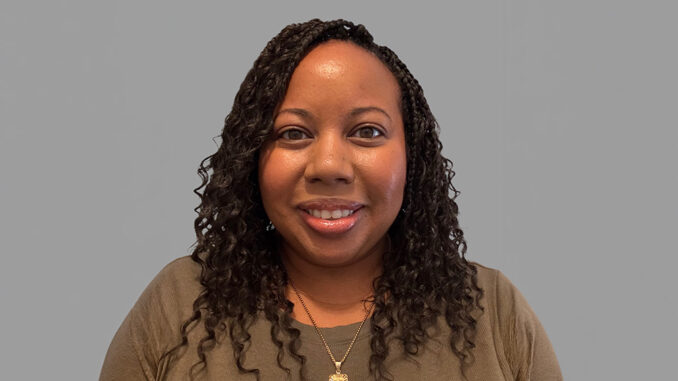
Kristal Vardaman, Senior Policy Expert, Aurrera Health Group
“Long-term services and supports include everything from personal care to home modifications and assistive technology,” says Kristal Vardaman, a senior policy expert at Aurrera Health Group and a former advisor to federal Medicaid officials.
These supports, known as LTSS, allow millions of older adults and people with disabilities to remain in their homes instead of entering nursing facilities.
In that sense, LTSS functions as the part of the health care system that operates outside the doctor’s office or hospital, providing the day-to-day support that makes medical care effective. Without it, even the best clinical treatment can fail once a patient returns home.
Over the past several decades, the health care system has slowly expanded to include these supports as a core part of care. Fewer people now live in nursing homes, and more receive care in their homes and communities, supported by family members, local programs like Meals on Wheels, and a growing network of service providers.
The shift reflects both common sense and research. Most people prefer to stay at home. And in many cases, home-based care costs less. Over time, that shift has also saved billions in federal and state health care spending by reducing reliance on more expensive institutional care.
But the system that funds that care has not kept up.
“It’s not really one system,” Vardaman says. “It’s layers that have been built over time, mostly through Medicaid.”

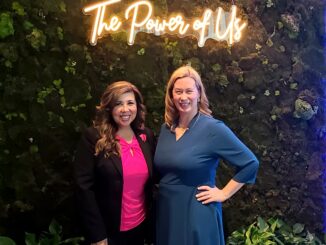
Photo Courtesy Carrie Graham
That layered structure has produced what Carrie Graham, research professor and the director of the Medicare Policy Initiative at Georgetown’s Center on Health Insurance Reform (CHIR), describes as a “perverse” dynamic: a system that often pays first for institutional care, even when lower-cost, home-based options would produce better outcomes.
At the heart of the problem is how Medicaid is designed. Under federal law, nursing home care is a mandatory benefit. Home and community-based services—the very supports that help people avoid institutions—are optional.
That distinction has real consequences.
“States can cap how many people receive home-based services, which is why there are waiting lists,” Vardaman says. “That doesn’t exist for nursing home care.”
In practice, that means people can be guaranteed access to a nursing home, but not to the services that might keep them out of one.
For many middle-income families, the stakes are financial as well as personal. Those who don’t qualify for Medi-Cal but lack the resources to pay for long-term care can quickly exhaust their savings paying for nursing home care—often spending down their assets until they become eligible for public assistance. Graham says this dynamic leaves a large group of Californians caught in the middle: not poor enough to qualify for help upfront, but not wealthy enough to afford care for long.
The result is a disconnect: the health care system increasingly depends on long-term supports to keep people healthy, but does not consistently fund them.
Programs that support people at home can be remarkably effective. A relatively small investment in meal delivery, caregiver support, or home modifications can prevent far more expensive hospitalizations or nursing home stays.
Even modest supports for family caregivers—such as respite care—can make the difference between staying at home and entering an institution.
Yet despite that track record, these services remain vulnerable.
As states respond to new fiscal pressures tied to H.R. 1, optional programs are often the first place officials look to cut.
That worries experts like Graham, who see the current moment as a turning point.
After decades of progress shifting care into homes and communities, she warns that those gains could be reversed—not because the model failed, but because the funding structure leaves it exposed.
“Because these services are optional, they become a lever states can use to deal with budget pressure,” Vardaman says.
The result would be more people pushed into nursing homes—not because it’s better care, but because it’s the only care the system guarantees.
The risks are not abstract. They show up in real lives.
In some cases, limited access to home-based care means people must leave their communities—moving into nursing facilities away from family and support networks.
At the same time, those who remain at home often face a fragmented and confusing system, with multiple programs, eligibility rules, and waiting lists to navigate.
“It’s a very complex system that we’re asking people to figure out,” Vardaman says.
That complexity falls hardest on those least equipped to manage it: older adults, people with disabilities, and their caregivers.
And while policymakers debate budgets and program structures, the stakes remain deeply personal.
“These are services people need every day,” Vardaman says. “To bathe, to dress. Without them, someone may not even get out of bed.”
The evidence is clear: supporting people at home leads to better outcomes and, in many cases, lower costs. The question now is whether the system will continue moving in that direction—or begin to reverse course.
For more information on long-term care visit The California Collaborative for Long Term Services and Supports at https://www.ccltss.org/