Keeping organic waste out of landfills benefits everyone
by Anne Stokes
Landfills are a critical and limited resource. Reducing the amount of material sent to them benefits our entire community and region. By working together to minimize waste and prioritize reuse whenever possible, we can help preserve this essential resource and ensure that future generations have safe, responsible places to manage materials that truly cannot be reused.
“No matter who you are, no matter where you are, no matter how big or small you are, we all are being asked to do the same action, so let’s do it and do good for ourselves, our community, our planet and save money.”
Mallika Sen
Director of Environmental Solutions, Solana Center for Environmental Innovation
“Not sending organics to the landfill is a small but very accessible step that is available to all of us in California,” says Mallika Sen, Director of Environmental Solutions for the Solana Center for Environmental Innovation. “No matter who you are, no matter where you are, no matter how big or small you are, we all are being asked to do the same action, so let’s do it and do good for ourselves, our community, our planet and save money.”
California’s Senate Bill 1383 (SB 1383) targets one of the largest contributors to landfill volume: organic waste. Food scraps, yard trimmings, and other organic materials make up a significant portion of what ends up in landfills, where they break down and generate methane—a potent climate‑warming gas. This also accelerates the need for new disposal sites by taking up valuable landfill space.
SB 1383 aims to reduce the amount of organic waste sent to landfills by 75%. By keeping organics out of the trash stream, the law helps preserve limited landfill space, lowers greenhouse gas emissions, and ensures organic materials are transformed into valuable products like compost and renewable energy instead of being buried.
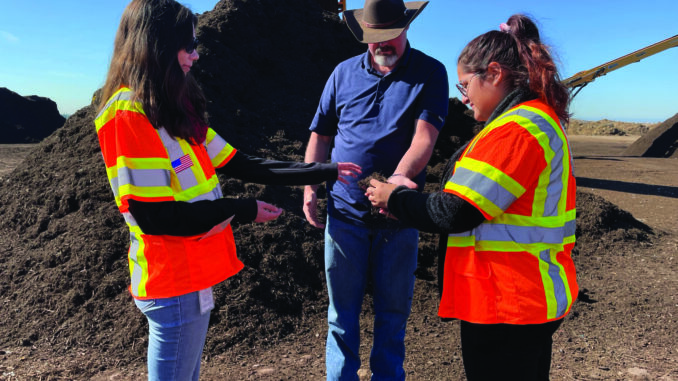
The success of SB 1383 requires everyone’s involvement. Dr. Craig Kolodge, Business Development and Sustainability Manager for San Pasqual Valley Soils, emphasized the greater importance of these efforts: “We need to educate ourselves and then teach others the art and practice of repurposing compost and how it benefits soil health,” he says.
“Without a focus on this ‘last mile organic recycling,’ we will fail to realize nature’s gift of regenerating all life on this planet.”
To learn where and how to recycle just about anything: Find out at WasteFreeSD.org