Organic recycling contributes to healthy soil, supporting local farms
by Stacy Brandt
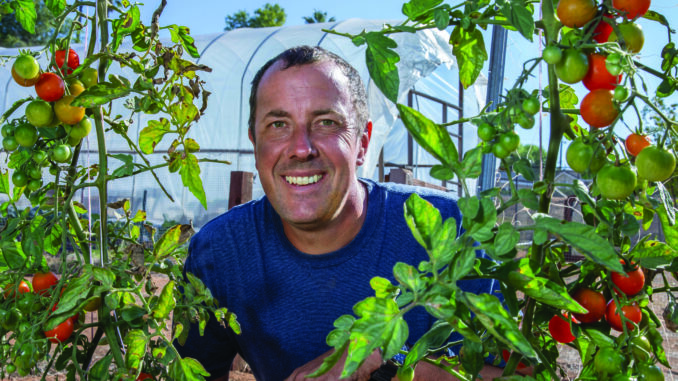
For Josh Raser, the quality of the soil at Hidden Valley Farm is as important as that of the vegetables that grow from it.
“It’s the foundation of my farm,” says Josh, owner and operator of the 1.5-acre farm in Escondido. “I’m building soil, and everything else comes off of that. Composting keeps the topsoil going and improves it.”
The secret to healthy soil at Hidden Valley Farm, he says, is using compost instead of chemicals or tilling. There is growing research about how diverse nutrients in soil can help protect it from pests and the effects of climate change, such as drought.
“Applying compost and building organic matter in the soil can help to create more long-term resilience to drought and water loss. ”
Ellie Honan
Farm Conservation Advisor, Resource Conservation District of Greater San Diego County
“Applying compost and building organic matter in the soil can help to create more long-term resilience to drought and water loss,” says Ellie Honan, Farm Conservation Advisor with the Resource Conservation District of Greater San Diego County. “I think that’s something that agriculture forgot for many years.”
The conservation district helps conserve natural resources by providing education, technical assistance, and programs that promote sustainable land use. This includes connecting local farmers with federal, state, and local composting resources.
At Hidden Valley Farm, Josh creates his own compost with plant materials and food waste. He says this enriches the soil for future generations, and the same simple composting techniques can be used by anyone, regardless of what and where they’re growing or how much space they have.
“Composting is something that anyone can do,” Josh says. “Even if you live in an apartment and are doing a little bit of backyard farming.”
By recycling materials such as food scraps and yard trimmings at home, residents are supporting San Diego County’s flourishing agriculture industry, which adds more than $2.8 billion to the local economy. The region’s unique climate and various micro-climates allow local farmers to grow more than 200 diverse agricultural products. This includes everything from strawberries along the coast to apples in the mountains and palm trees in the desert. Most of those farms are small. Many focus on farming practices that are healthy for the environment, making composting and natural fertilization even more vital.
There are other important benefits to composting, especially on a large scale, Ellie says. By using organic materials instead of chemical fertilizers, farmers can help prevent runoff into local water sources. Composting also helps to cut down on methane production that happens when food waste ends up in landfills. Methane is one of the leading contributors to global warming, and reducing its emissions through composting helps create a healthier global climate.
Want to learn more?
- Hidden Valley Farm Facebook:
- Resource Conservation District of Greater San Diego County: RCDSanDiego.org
- Recycling Events: https://www.sandiegocounty.gov/content/sdc/dpw/recycling/Events.html
- Information about the County’s composting efforts and community events can be found by searching for “compost” at SanDiegoCounty.gov
- San Diego Recycling: tinyurl.com/SDRecycling